
There’s something deeply comforting about simple, handmade items, and crochet cloths are the perfect example. These small, useful and charming creations can bring warmth and intention to everyday routines, whether that’s washing dishes or caring for your skin. Crochet cloths are reusable cloths that are usually made from soft cotton yarn. They can be used as dishcloths, washcloths, cleaning cloths, or even as gentle face cloths. Each one is practical yet also carries that special handmade feeling which transforms ordinary moments into slower, more mindful experiences.
One of the joys of crochet dishcloths is their sustainability. Reusable cloths replace disposable sponges and wipes, helping to create a calmer, more eco-friendly home. Cotton crochet cloths are absorbent, durable and gentle on your hands and the environment. Over time, they soften beautifully, becoming even more pleasant to use. For the best results, choose 100% cotton yarn. This is the ideal yarn for dishcloths as it is easy to wash, long-lasting and highly absorbent. Although bamboo and linen blends also add a lovely natural texture, cotton remains the most popular choice for crocheted dishcloths and washcloths.
Crochet cloths are ideal for beginners and provide experienced crafters with a relaxing project. Simple square patterns made using basic stitches are relaxing and quick to make, while textured stitches create an attractive pattern and provide gentle scrubbing power. They’re perfect for quiet evenings and slow weekends.
Whether you’re embracing slow living, reducing waste, or making thoughtful, handmade gifts, crochet cloths offer the simple pleasure of creation — one cozy stitch at a time!
I think crocheted dishcloths are best for washing dishes because they last longer, hold water better and are more sustainable and eco-friendly. It’s also a good excuse to buy more yarn, as we can always use more dishcloths for ourselves or to give as gifts to friends. So, if you notice a few hundred skeins of yarn appearing in our stash, they’re probably destined for dishcloths!
For my crochet dishcloths, I’ve used 150g of Pure Cotton Fine (50g = 170m/1.76oz = 185 yards) and a 2.5mm hook.
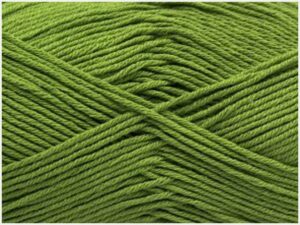
This is a very high-quality cotton yarn. This yarn is made from 100% combed Turkish cotton, which is soft, flexible, and exceptionally durable. Textiles made from Turkish cotton remain beautiful for many years and only become softer with use. This yarn also excels in its absorbing properties, while also being quick-drying. The colour chart includes a wide range of beautiful colours — all you have to do is choose your favourite and get started.
For my projects, I’ve used Pistachio Green. Choose your favourite HERE.
Buy me a cup of coffee if you want to support my work as a crochet and knitting designer and help me to provide more free patterns and designs:

The final dimensions for:
-
The Almond crochet dishcloth: 24 cm x 21.5 cm (9.5 inches x 8.5 inches);
-
The Alpine crochet dishcloth: 23.5 cm x 24 cm (9.5 inches x 9.5 inches);
-
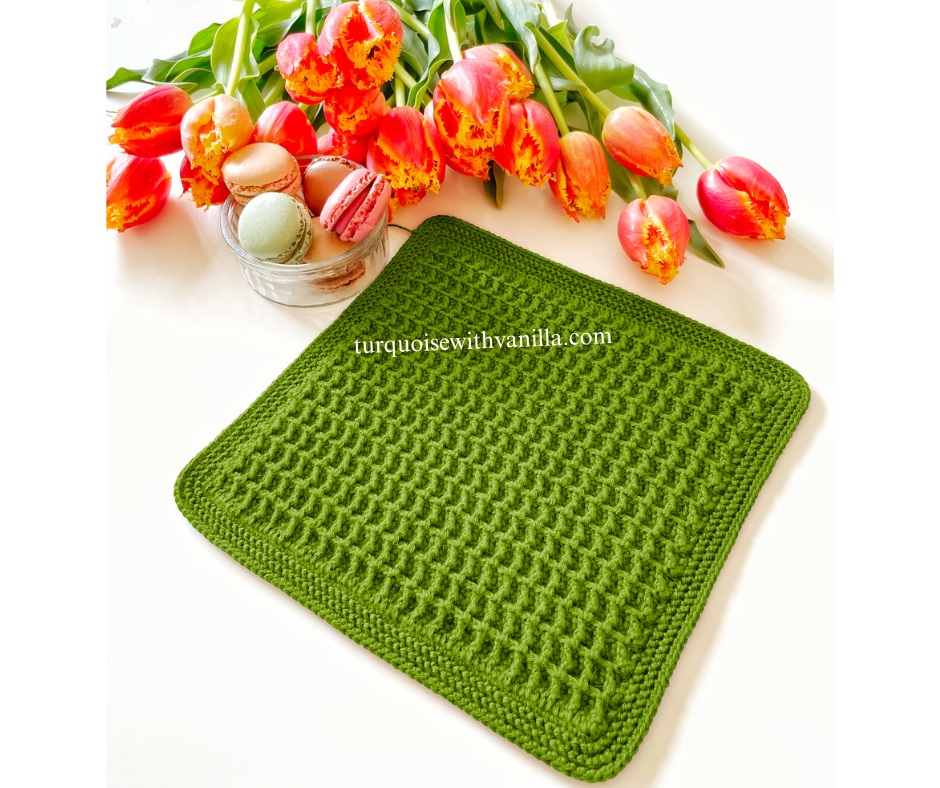
The Waffle crochet dishcloth: 23 cm x 22 cm (9 inches x 8.7 inches).
Printable version for purchase HERE.
1. The Almond crochet dishcloth:

The chart:
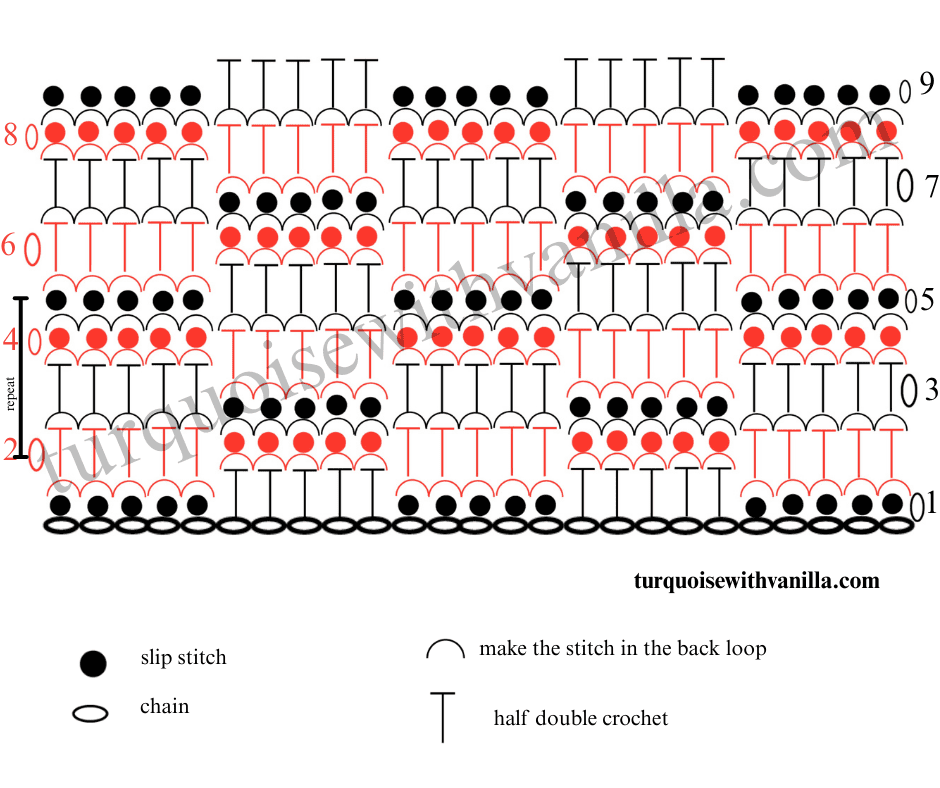
The written instructions:
Abbreviations:
The pattern uses US crochet terminology.
ch= chain;
st= stitch;
sts= stitches;
sl.st= slip stitch;
hdc= half double crochet;
Start with 76 chains.
1. Row 1: sl. st in the second ch from the hook, and make 1 sl. st in every next 4 chains. *Make 1 hdc in every next 5 chains, and 1 sl. st in every next 5 chains*. Repeat *-* to the end of the row. You should have 75 sts.
2. Row 2: ch 1, *Make 1 hdc in every next 5 sts in the back loop, and 1 sl. st in every next 5 sts in the back loop*. Repeat *-* to the last 5 sts and make 1 hdc in the back loop in every sts to the end of the row. You should have 75 sts.
3. Row 3: ch 1, *Make 1 hdc in every next 5 sts in the back loop, and 1 sl. st in every next 5 sts in the back loop*. Repeat *-* to the last 5 sts and make 1 hdc in the back loop in every sts to the end of the row. You should have 75 sts.
4. Row 4: ch 1, *Make 1 sl. st in every next 5 sts in the back loop, and 1 hdc in every next 5 sts in the back loop*. Repeat *-* to the last 5 sts and make 1 sl. st in the back loop in every sts to the end of the row. You should have 75 sts.
5. Row 5: ch 1, *Make 1 sl. st in every next 5 sts in the back loop, and 1 hdc in every next 5 sts in the back loop*. Repeat *-* to the last 5 sts and make 1 sl. st in the back loop in every sts to the end of the row. You should have 75 sts.
Repeat the pattern from row 2 to row 5 until you have the desired length. I crocheted until I had approximately 19 cm /7.5 inches.
The edge:
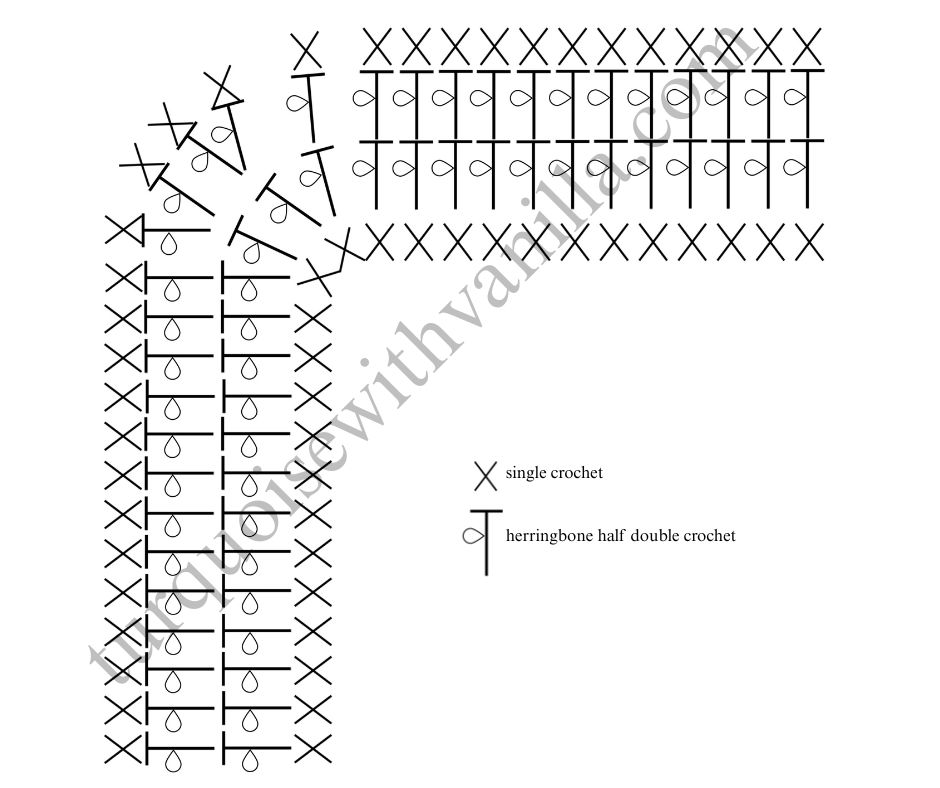
Crochet the edge on the right side of the dishcloth. To do this, crochet one round of single crochet stitches, followed by two rounds of herringbone half-double crochet stitches, and then finish with one round of single crochet stitches.
1. Round 1: Don’t cut the yarn and continue to crochet a single crochet stitch edge around the cloth, crochet 2sc in corners (choose as a corner the last stitch of the row). Slip stitch in the first stitch to close the round. Crochet 1 single crochet stitch for every row of the cloth.
2. Round 2: ch 2, crochet herringbone half double crochet in every next stitch of the round. For the corners, crochet 2 herringbones half double crochet in each of the next 2 stitches of the corners. Slip stitch in the first stitch to close the round.
3. Round 3: repeat round 2;
4. Round 4: ch1, crochet 1sc st in every next st of the round. Slip stitch in the first stitch to close the round.
Tie off and weave in the ends.
The chart for the edge (use the same for all patterns):
2. The Alpine dishcloth:
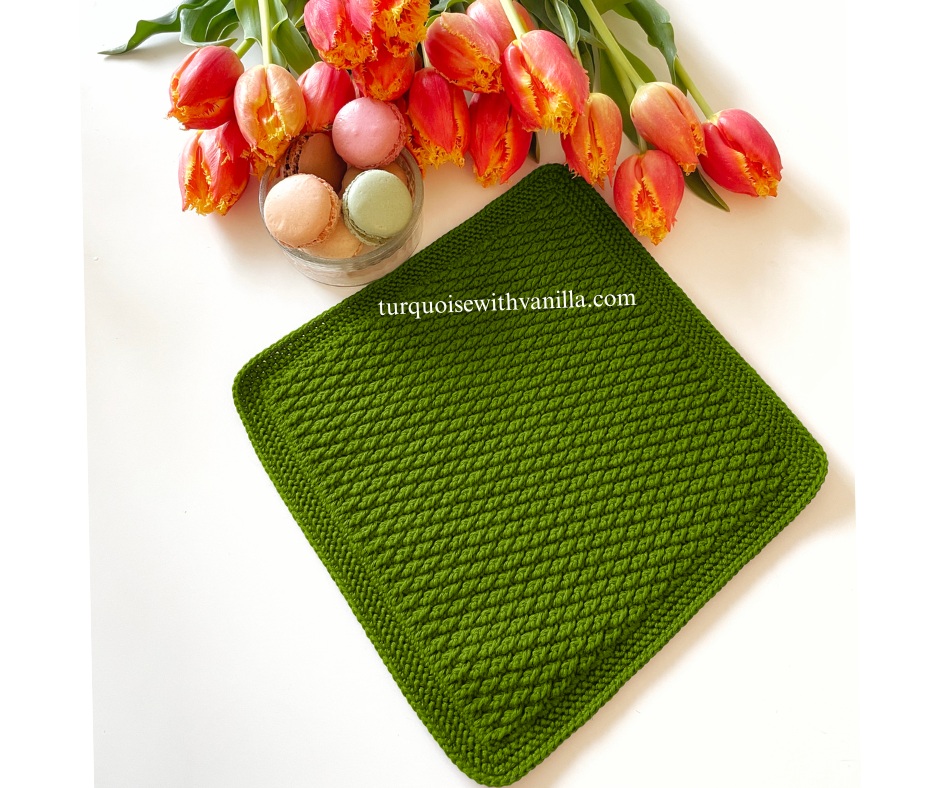
The chart:

The written instructions:
Abbreviations:
ch= chain;
sc= single crochet;
dc= double crochet;
fpdc= front post double crochet.
Start with 54 ch.
1. Row 1: double crochet in the 3rd chain from the hook, and continue crocheting double crochet in every next chain until the end of the row. You should have 52 double crochet stitches.
2. Row 2: chain 1 (don’t count as a stitch), single crochet in the same stitch, continue crocheting single crochet in every next stitch until the end of the row. You should have 52 single crochet stitches.
3. Row 3: chain 2 (don’t count as a stitch), *skip the next single crochet and crochet 1 front post double crochet around the double crochet below the skipped single crochet, double crochet in the next stitch*. Repeat *-* to the end of the row. You should have 52 stitches
Make sure to crochet every double crochet stitch in the next single crochet stitch of the previous row and every front double crochet in the double crochet below. The front post double crochet is worked on the intervening rows, but only on every other stitch.
4. Row 4: chain 1 (don’t count as a stitch), single crochet in the same stitch, continue crocheting single crochet in every next stitch until the end of the row. You should have 52 single crochet stitches.
5. Row 5: chain 2 (don’t count as a stitch), double crochet in the same stitch, *skip the next single crochet and crochet 1 front post double crochet around the double crochet below the skipped single crochet, double crochet in the next stitch*. Repeat *-* to the last stitch, and in the last stitch of the row, make a double crochet stitch. You should have 52 stitches.
Repeat the pattern from row 2 to row 5 until the desired length is reached. I crocheted until I reached approximately 20 cm/8 inches. When you have this length, do not crochet the final single crochet row. Instead, start crocheting the edge (this row is made in the first round of the edge, but on the right side).
The video tutorial for the Alpine stitch:
The edge:
Crochet the edge on the right side of the dishcloth. To do this, crochet one round of single crochet stitches, followed by two rounds of herringbone half-double crochet stitches, and then finish with one round of single crochet stitches.
1. Round 1: Don’t cut the yarn and continue to crochet a single crochet stitch edge around the cloth, crochet 2sc in corners (choose as a corner the last stitch of the row). Slip stitch in the first stitch to close the round. Crochet 1 single crochet stitch for every row of the cloth.
2. Round 2: ch 2, crochet herringbone half double crochet in every next stitch of the round. For the corners, crochet 2 herringbones half double crochet in each of the next 2 stitches of the corners. Slip stitch in the first stitch to close the round.
3. Round 3: repeat round 2;
4. Round 4: ch1, crochet 1sc st in every next st of the round. Slip stitch in the first stitch to close the round.
Tie off and weave in the ends.
3. The Waffle dishcloth:
The chart:
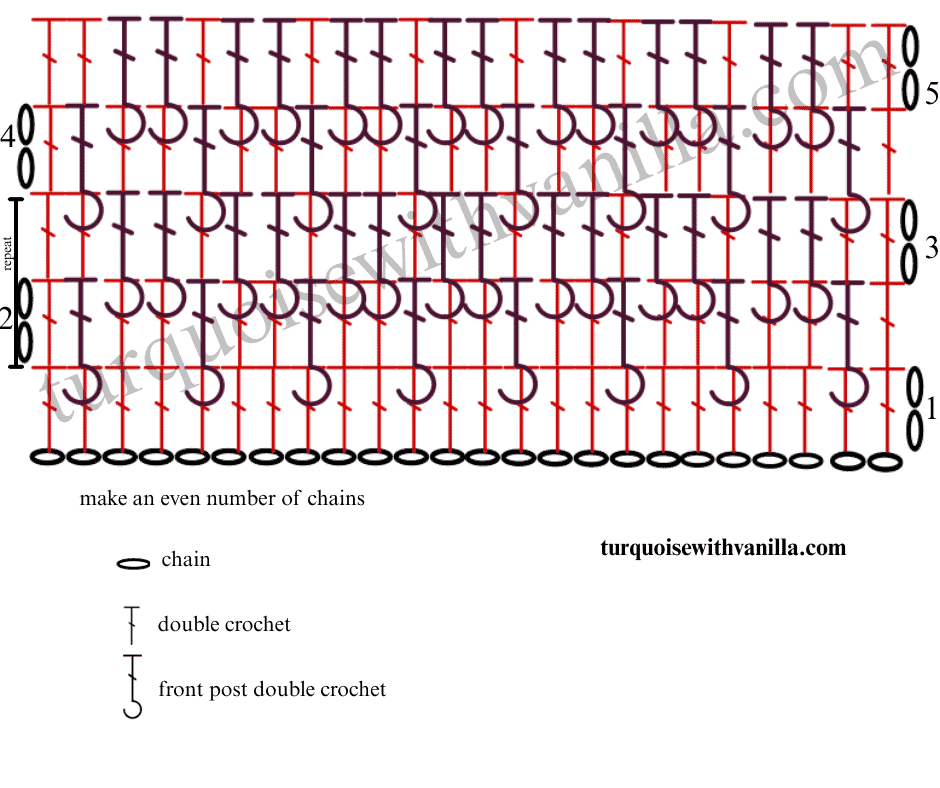
The written instructions:
Abbreviations:
ch= chain;
sc= single crochet;
dc= double crochet;
fpdc= front post double crochet.
Start with 72 chains.
1. Row 1: dc in 3rd ch from the hook, dc to the end of the row. You should have 70 sts.
2. Row 2: chain 2 (don’t count as a stitch), dc in the same stitch, *skip the next double crochet and crochet 1 front post double crochet around the stitch below the skipped stitch, 1 double crochet in every next 2 stitches*. Repeat *-* to the last 2 stitches and make 1 fpdc in the next st and 1 dc in the last st. You should have 70 stitches.
3. Row 3: chain 2 (don’t count as a stitch), dc in the same stitch, * 1 double crochet in the next stitch, 1 front post double crochet in every next 2 stitches*. Repeat *-* to the last stitch and make 1 double crochet. You should have 70 stitches.
Make sure that where there is a double crochet on the previous row, you make a front post double crochet, and vice versa.
Repeat the pattern from row 2 to row 3 until the desired length is reached. I crocheted until I reached approximately 19 cm/7.5 inches.
The edge:
Crochet the edge on the right side of the dishcloth. To do this, crochet one round of single crochet stitches, followed by two rounds of herringbone half-double crochet stitches, and then finish with one round of single crochet stitches.
1. Round 1: Don’t cut the yarn and continue to crochet a single crochet stitch edge around the cloth, crochet 2sc in corners (choose as a corner the last stitch of the row). Slip stitch in the first stitch to close the round. Crochet 1 single crochet stitch for every row of the cloth.
2. Round 2: ch 2, crochet herringbone half double crochet in every next stitch of the round. For the corners, crochet 2 herringbones half double crochet in each of the next 2 stitches of the corners. Slip stitch in the first stitch to close the round.
3. Round 3: repeat round 2;
4. Round 4: ch1, crochet 1sc st in every next st of the round. Slip stitch in the first stitch to close the round.
Tie off and weave in the ends.
The video tutorial for the waffle stitch:
Check out these awesome crochet projects for your kitchen or bathroom:
- Crochet dish/washcloth set;
- Crochet kitchen/dish towel;
- Alpine dish/washcloth;
- Grit crochet dishcloth;
- Crochet Bath Pouf;
- Crochet Spa Set;
- Face Scrubbies;
- Granny squares coasters.
I hope you enjoyed making this Trio crochet dishcloth! I can’t wait to see your photos featuring this crochet set! Please tag me when you share your project on Instagram or Facebook, or use the hashtag #turquoisewithvanilla.
Follow my Facebook and Instagram pages to see my latest projects. Subscribe to my YouTube channel for my video tutorials: https://www.youtube.com/channel/UCUpzoP-RDaJV1_2kvJMh5QQ/videos
*Some links may be affiliate links, allowing me to earn a small commission on any products purchased through my recommendation. Please note that this does not influence my opinions or recommendations in any way.
© Turquoise with Vanilla, 2026. All rights reserved. The pattern and photographs of the items on this website are the property of Julia Bleau, trading as Turquoise with Vanilla. Please do not sell the pattern or claim it as your own. The pattern is for personal use only and must not be translated or reproduced in another language. Please respect my rights and do not share or publish this pattern anywhere without my permission. You can sell items made using this pattern, but please credit Turquoise with Vanilla or Julia Bleau as the designer.


