
I just love the simple, handmade crochet dishcloths! There’s something deeply comforting about them, especially when they showcase a rich texture like an alpine stitch dishcloth. These small yet practical crochet kitchen essentials are the perfect way to bring warmth and intention into your daily routine, transforming dishwashing into a more mindful and enjoyable ritual. A handmade crochet dishcloth crafted from soft cotton yarn is not only highly functional, but also adds a cozy, decorative touch to your kitchen. Each alpine stitch dishcloth is a masterpiece of texture and utility, making even the simplest chores feel a bit more special.
One of the biggest advantages of an alpine stitch dishcloth is its eco-friendly appeal. Choosing reusable crochet dishcloths instead of disposable sponges or wipes is a simple way to reduce waste and support a sustainable lifestyle. Cotton crochet dishcloths are known for being absorbent, durable, and gentle on surfaces, which makes them perfect for everyday use. Over time, they become even softer while maintaining their performance. For best results, using 100% cotton yarn is essential—it offers excellent absorbency, is easy to wash, and holds up well through repeated use. While other fibers are available, cotton remains the top choice for long-lasting crochet dishcloth patterns like the alpine stitch.
The Alpine stitch crochet dishcloth is a great example of a project that’s both beautiful and practical. Its richly textured surface creates a thick, durable fabric that looks elegant while being perfect for everyday use. If you’re making your first crochet dishcloth pattern or adding to your collection, the Alpine stitch is a great mix of style and function. The Alpine stitch is different from flat stitches because it combines front post stitches with double crochet stitches and single crochet stitches rows to create a design with more texture. The raised ridges are what make the dishcloth look like it does, and they also make it great for scrubbing dishes and cleaning countertops. This project is perfect for crocheters who already know the basics and want to learn something new. Once you’ve got the hang of the repeat, you’ll find the stitch relaxing and enjoyable to crochet.
There are so many reasons why I love making this textured crochet dishcloth.
First, the Alpine stitch creates a luxurious texture without needing complicated stitch combinations. The pattern repeats, so it’ll stick in your mind after a few rows.
Second, the finished fabric is thicker than many traditional dishcloth patterns. This extra thickness helps absorb water while remaining sturdy enough for everyday kitchen cleaning.
The design looks sophisticated enough to give as a handmade gift. You can put together a nice little gift for someone by pairing a few dishcloths and a matching kitchen towel. It’s an affordable and thoughtful present.
Some of the biggest advantages include:
- It’s made of thick, durable fabric.
- It has an excellent texture for gentle scrubbing.
- It has a beautiful, modern appearance.
- It’s a great stash-busting project.
- It’s a quick weekend crochet project.
- It’s the perfect handmade gift.
Why the Alpine Stitch Is Perfect for Dishcloths
The Alpine stitch it may look complicated, but it’s really just a few basic crochet stitches. Once you get the hang of where the front post stitches are placed, the pattern will start to feel repetitive and relaxing. The Alpine stitch’s texture makes it catch the light really well, making even simple cotton yarn look elegant.
The Alpine stitch is great for kitchen projects because it creates a dense fabric, which is different from lace stitches or openwork patterns.
Texture is key when making an easy crochet dishcloth. The raised stitches create a gentle scrubbing power that won’t damage your dishes or delicate surfaces. This makes the Alpine stitch great for washing fruits and vegetables, wiping countertops, or cleaning cookware. The dense stitch pattern also makes the fabric more durable than many open stitch designs. If you take care of it, an Alpine stitch dishcloth can last for years. Another perk is that the textured surface hides everyday wear better than smooth stitches. No matter if you’re using solid colors or variegated yarn, the Alpine stitch always gives you a polished, professional finish.
Tips for Success
If this is your first time working the Alpine stitch, these simple tips will help.
- Count your stitches after every row.
- Use stitch markers if needed.
- Maintain even tension.
- Don’t pull front post stitches too tightly.
- Block the finished dishcloth for crisp edges.
- Practice the stitch repeat before beginning the full project.
The pattern becomes much easier after the first few repeats.

The Best Yarn for an Alpine Stitch Crochet Dishcloth
Picking the right yarn is key to getting the best results when you’re making a crochet kitchen cloth. When it comes to dishcloths, 100% cotton yarn is still the way to go. Cotton is really absorbent, durable, and you can just throw it in the washing machine. It’ll get softer with use too. Mercerized cotton makes the stitch definition really stand out, especially with the Alpine stitch. Non-mercerized cotton has a softer, farmhouse-inspired look. When it comes to kitchen dishcloths, avoid acrylic yarn. Acrylic is great for decorative items, but it doesn’t absorb water as well as cotton and might soften when exposed to high heat.
Color Ideas:
One of the best things about this crochet washcloth is how it looks good in different colours. Neutral shades are perfect for kitchen accessories because they go with almost any style. We’ve got a bunch of great colors to choose from: cream, white, sage green, dusty blue, mustard, terracotta, charcoal, and soft gray.
If you’re going for a more playful look, try striped rows or self-striping cotton yarn. Seasonal colours make great gifts year-round.
How to Care for Your Crochet Dishcloth
If you take care of it, your cotton crochet dishcloth will last a lot longer. Just wash it in warm water with regular detergent. Just be careful with fabric softener, since it can reduce cotton’s absorbency. Tumble dry on low heat or let the dishcloth air dry naturally. If the fabric starts to curl after you wash it, just reshape it while it’s still damp. Cotton often softens up nicely after a few washes, making your dishcloth even more enjoyable to use over time.
Here are some other ways you can use the Alpine stitch:
The Alpine stitch is great for a lot of different crochet projects. Its thick texture makes it great for:
Explore More Crochet Dishcloth Patterns:
- Trio crochet dishclots;
- Shell stitch crochet dishcloth;
- Grit crochet dish set;
- Chevron crochet dishcloth;
- Star stitch dishcloth;
- Waffle dish/washcloth;
For my crochet Alpine stitch washcloth/dishcloth I’ve used 50 g Paintbox yarns cotton 4 ply Flamingo and a 3 mm hook.
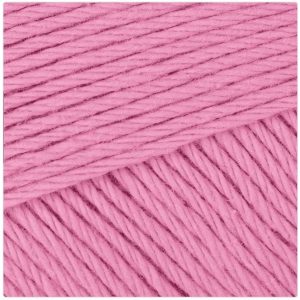
This is such high-quality cotton yarn! This yarn is buttery soft, 4-ply, and durable, making it perfect for all your cotton knitting and crochet projects.
The color chart is full of beautiful colours. Take your pick and get started! You’re going to love this yarn, and you can buy it right HERE.
Buy me a cup of coffee if you want to support my work as a crochet and knitting designer and help me to provide more free patterns and designs:

The pattern for the Alpine stitch crochet dishcloth:
The final dimensions are: 20 cm x 21.5 cm (8 inches x 8.5 inches);
Abbreviations:
ch= chain;
sc= single crochet;
dc= double crochet;
hdc= half double crochet;
fpdc= front post double crochet.
The pattern uses US crochet terminology.
Pattern Instructions:
The chart for the stitch:
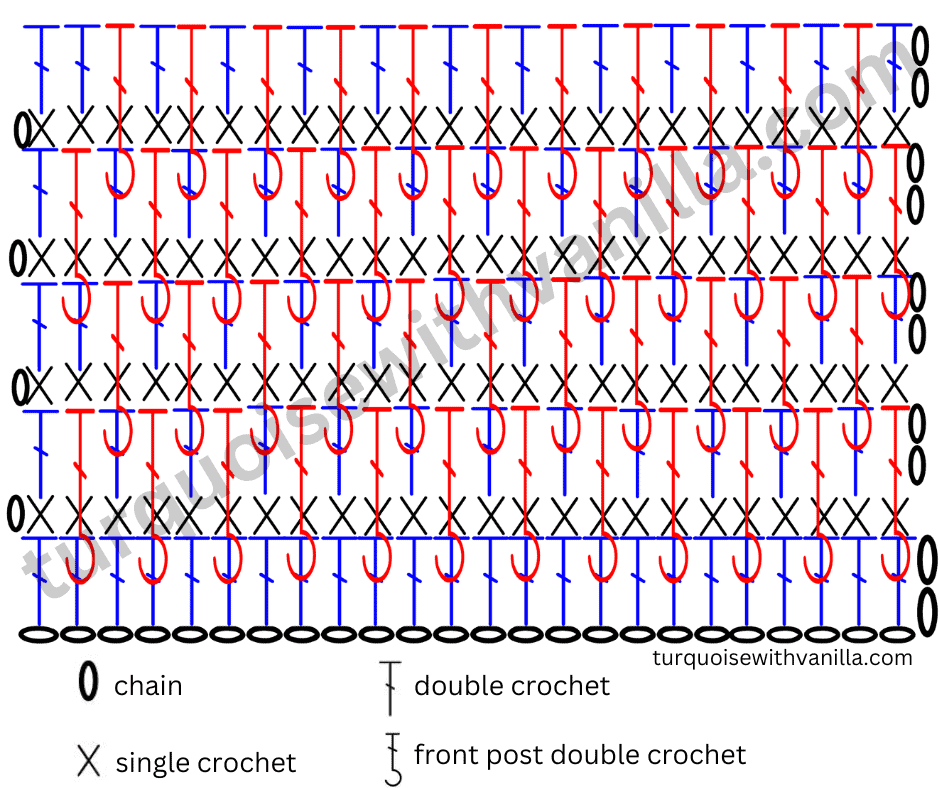
The video tutorial for the alpine stitch:
The written instructions:
Start with 52 chains.
1.Row 1: double crochet in 3rd chain from the hook, and continue crocheting double crochet in every next chain to the end of the row. You should have 50 double crochet stitches.
2. Row 2: chain 1 (don’t count as a stitch), single crochet in the same stitch, continue crocheting single crochet in every next stitch to the end of the row. You should have 50 single crochet stitches.
3. Row 3: chain 2 (don’t count as a stitch), *skip the next single crochet and crochet 1 front post double crochet around the double crochet below the skipped single crochet, double crochet in the next stitch*. Repeat *-* to the end of the row. You should have 50 stitches.
Make sure to crochet every double crochet stitch in the next single crochet stitch of the previous row and every front double crochet in the double crochet below. The front post double crochet is worked on the intervening rows, but only on every other stitch.
4. Row 4: chain 1 (don’t count as a stitch), single crochet in the same stitch, continue crocheting single crochet in every next stitch until the end of the row. You should have 50 single crochet stitches.
5. Row 5: chain 2 (don’t count as a stitch), double crochet in the same stitch, *skip the next single crochet and crochet 1 front post double crochet around the double crochet below the skipped single crochet, double crochet in next stitch*. Repeat *-* to the last stitch and in the last stitch of the row make a double crochet stitch. You should have 180 stitches.
Make sure that where you have a double crochet on the previous row to make a front post double crochet and where you have a front post double crochet you will make a double crochet.
Repeat the pattern from row 2 until you reach the desired dimension. If you’re making the edging for the dishcloth, then don’t do the last row of the pattern. I’ve crocheted the Alpine stitch for 42 rows in total.
The edge:
Crochet the edge on the right side of the dishcloth. To do this, crochet one round of single crochet stitches:
- don’t make the last row of the single crochet stitches;
- start the edge with 1sc in the same stitch as the last stitch of the row and continue to crochet 1sc for every row. For this side you should have 44 stitches.
- for the 2nd side make 2 sc in the first stitch, and continue to crochet 1sc for every stitch to the last stitch of the side and make 2 sc. You should have 52 stitches.
- for the 3rd side make 1sc for every row and 2sc for the last stitch. You should have 44 stitches.
- for the last side make 1sc for every stitch. You should have 50 stitches.
For the edge don’t worry too much about getting the stitch count exact, just try to have a similar number for the opposite side (the first side with the 3rd and the 2nd side with the last side).
Tie off and weave in the ends.
Frequently Asked Questions about the Alpine stitch crochet dishcloth:
Is the Alpine stitch good for beginners?
Yes. While absolute beginners should first get the hang of double crochet and front post stitches, the Alpine stitch itself is repetitive and an easy pattern to make.
Does the Alpine stitch use more yarn?
Yeah, the Alpine stitch usually needs a bit more yarn than other stitch patterns because of its raised texture.
What yarn is best for a crochet dishcloth?
A 100% cotton yarn is the best choice because it’s absorbent, durable, washable, and it keeps the stitch definition nice and clear.
Does the Alpine stitch curl?
Not much. If you block and keep the tension consistent, you’ll get a nice, flat, even fabric.
Final Thoughts
The Alpine stitch crochet dishcloth is a wonderful combination of beauty, durability, and practicality. Its rich texture transforms an everyday kitchen essential into something that feels handmade in the best possible way.
Whether you’re crocheting for your own home, preparing gifts for friends, or adding another project to your handmade kitchen collection, this stitch is one you’ll come back to again and again.
Once you’ve got the hang of the Alpine stitch, you’ll probably find yourself using it in everything from blankets and baby blankets to accessories and all sorts of other crochet projects. It’s a classic texture that never goes out of style.
If you’ve made this crochet dishcloth set to sell or give as a gift, I recommend washing it by hand or in the washing machine at a maximum temperature of 40°C. Dry it flat, then iron it on the cotton setting. The dishcloth will smell and look better.
If you liked making the Alpine stitch crochet dishcloth, try using different yarn colours to make your own set of reusable kitchen cloths. Small projects like this are a great way to practice stitch texture while making something useful for your everyday life. Save this pattern for later, share it with other crochet lovers, and explore more easy crochet stitch ideas to expand your handmade kitchen collection.
I can’t wait to see your photos of this crochet dishcloth! Please tag me when you share your project on Instagram or Facebook, or use the hashtag #turquoisewithvanilla.
Follow my Facebook and Instagram pages to see my latest projects. Subscribe to my YouTube channel for my video tutorials: https://www.youtube.com/channel/UCUpzoP-RDaJV1_2kvJMh5QQ/videos
*Some links may be affiliate links, allowing me to earn a small commission on any products purchased through my recommendation. Please note that this does not influence my opinions or recommendations in any way.
© Turquoise with Vanilla, 2020. All rights reserved. The pattern and photographs of the items on this website are the property of Julia Bleau, trading as Turquoise with Vanilla. Please do not sell the pattern or claim it as your own. The pattern is for personal use only and must not be translated or reproduced in another language. Please respect my rights and do not share or publish this pattern anywhere without my permission. You can sell items made using this pattern, but please credit Turquoise with Vanilla or Julia Bleau as the designer
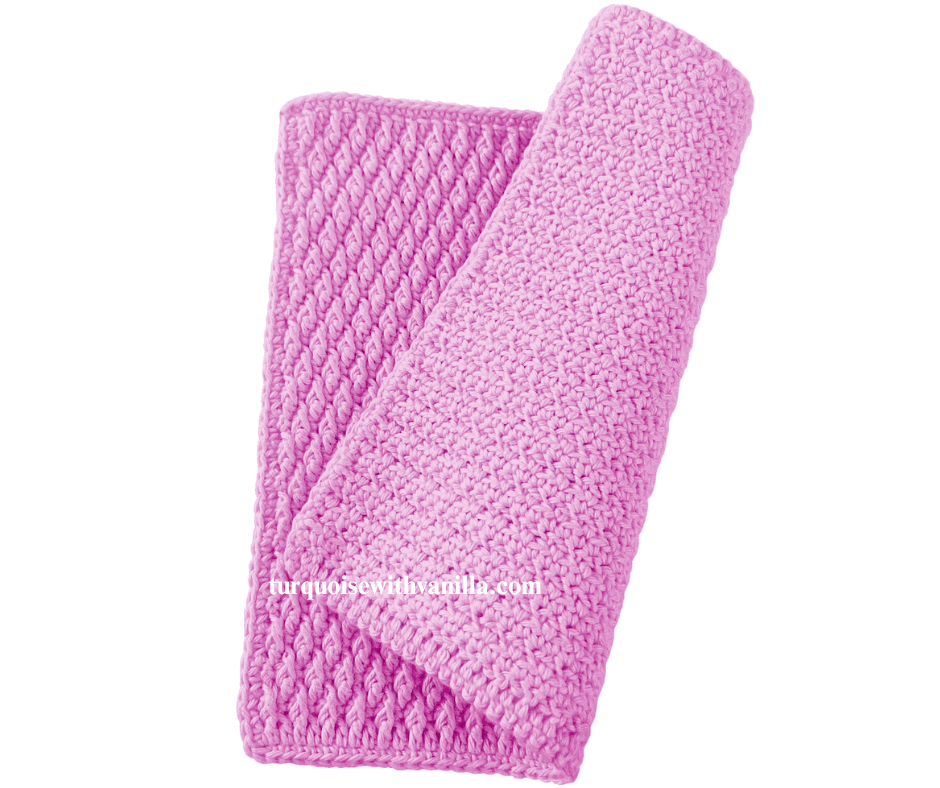


[…] Alpine crochet dishcloth; […]
[…] Alpine dish/washcloth; […]
[…] Alpine dish/washcloth; […]
[…] Alpine dish/washcloth; […]
[…] Alpine dish/washcloth; […]
[…] Alpine dish/washcloth; […]
[…] 4. Alpine stitch washcloth; […]
[…] 3. Alpine dish/washcloth; […]
[…] 3. Dish/wash cloth; […]
[…] 2. Alpine dish/wash cloth; […]
[…] can pair this crochet kitchen/dish towel with this Alpine dishcloth and you’ll have a cool crochet set for your kitchen. If you know how to crochet, your kitchen […]
[…] 3. Alpine stitch washcloth; […]
[…] this pouf bath to make a spa set, you can add to the set: crochet face scrubbies, and washcloth: Alpine stitch washcloth, Star stitch […]
[…] 3. The Alpine wash/dishcloth. […]
[…] 1. Alpine stitch wash/dishcloth; […]
[…] 1. Alpine stitch wash/dishcloth; […]
[…] 1. Alpine stitch washcloth; […]
[…] 1. Alpine stitch dishcloth; […]
[…] 1. Alpine stitch dish/ washcloth; […]
[…] Here is the wash/dishcloth I’ve crocheted with this stitch: https://turquoisewithvanilla.com/2020/06/11/how-to-crochet-an-alpine-stitch-washcloth-dishcloth/ […]